
Deed Types in Shelby Records
The Shelby County Clerk records whatever signed instrument is presented at the counter. Each deed type carries its own conveyed interest and its own promises. Related filings crowd the same shelves, so a name hit in the index does not always mean a transfer happened.
| Deed Type | What It Does | Common Use |
|---|---|---|
| General warranty deed | Conveys the stated interest with broad covenants. | Ordinary sales. |
| Special warranty deed | Limits covenants to claims through the grantor. | Some commercial sales. |
| Quitclaim deed | Conveys whatever interest exists, if any. | Family transfers and corrections. |
| Commissioner or sheriff deed | Records a transfer made under legal authority. | Judicial proceedings. |
| Executor or fiduciary deed | Transfers land through estate authority. | Probate administration. |
Mortgages and liens burden an interest rather than pass it. Assignments and releases track later changes to those encumbrances. Plats and restrictions can shape subdivision rights, and powers of attorney or affidavits of descent may explain who had authority to sign in the first place.
Shelby Legal Records Since 1792
The clerk's legal-record page reports coverage running from 1792 to the present. Most automated indexes reach back to 1960, encumbrances to 1955, and plats to 1958. Images exist for all instrument filings from May 1995 forward. Selected older images go back to 1980.
Those dates describe separate layers of the archive. An index entry can exist without an online image. A bound deed may predate automation entirely. A missing eCCLIX result is a reason to try another access channel. It is not a reason to give up. The official page lays out both the coverage and the eCCLIX route.
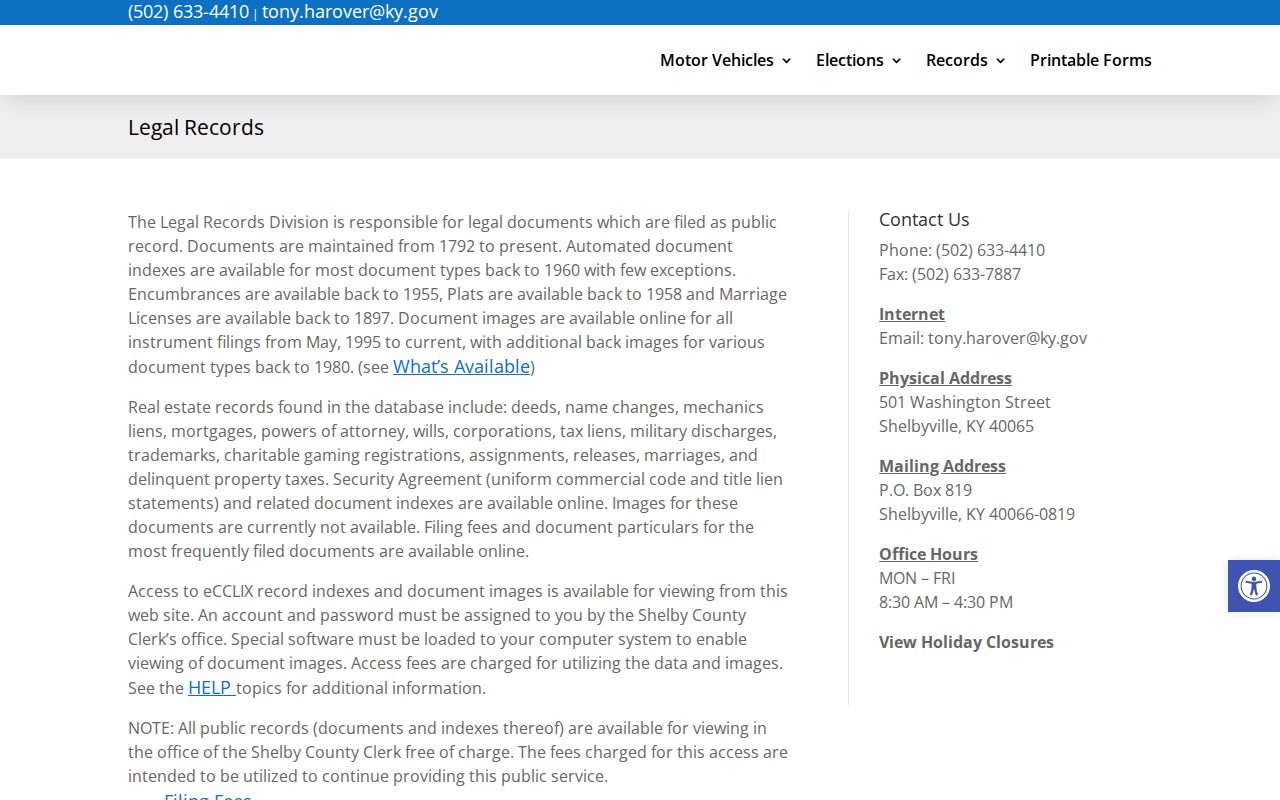
The stated dates help choose between an online image, index, or older book.
eCCLIX Requires an Account
Online access to Shelby deed records runs through eCCLIX, a paid service covering multiple counties. The public screen shows only username, password, remember-me, and recovery controls. Shelby-specific search columns stay behind the subscription wall, so a parcel or legal-description field cannot be promised.
| Channel | Verified input | Limit |
|---|---|---|
| Login | User name and password | Account required |
| Subscription | Monthly or single day | Vendor charges can change |
| County selection | Shelby | Must choose the right county |
| Records request | Parties, year, type, parcel, book/page | Be as precise as possible |
Plans include monthly and 24-hour options with setup, county, and user charges, so confirm the current price before subscribing.
Inside the eCCLIX Gate
The eCCLIX login shows the required account entry.
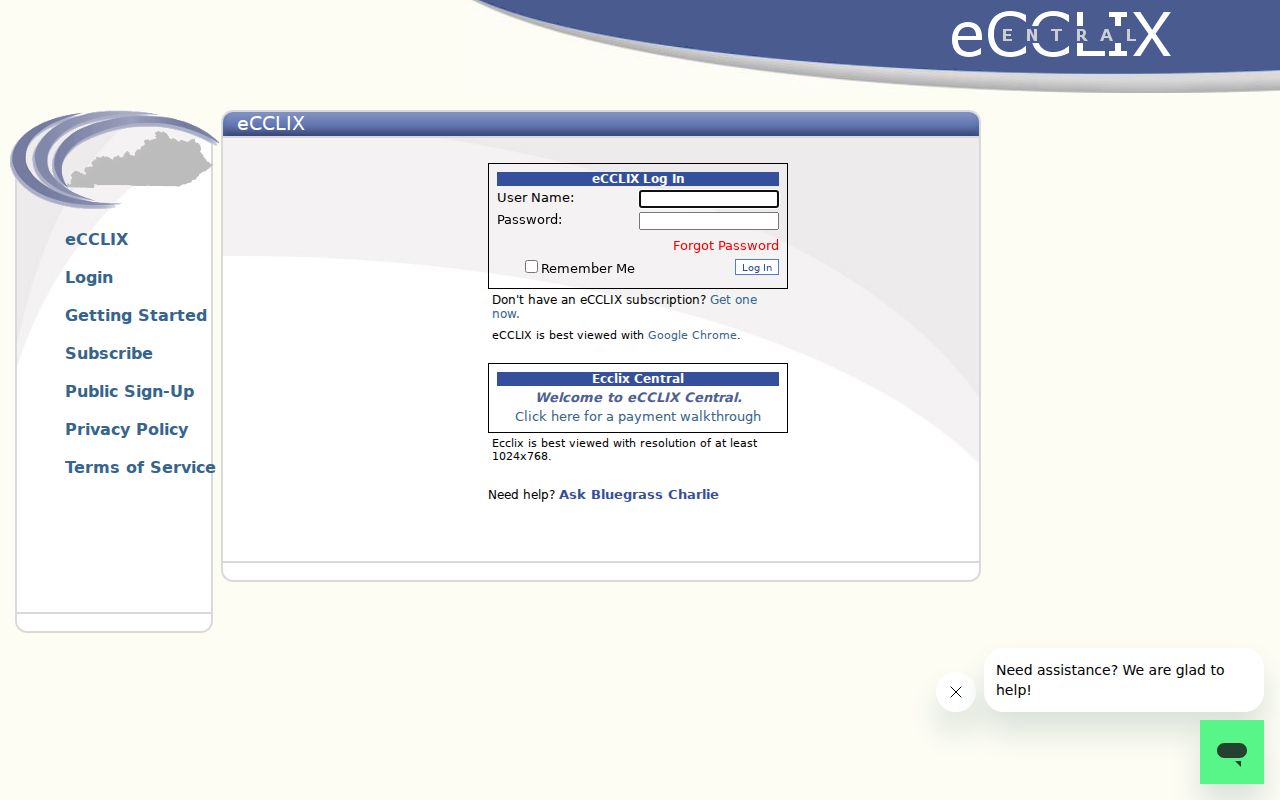
The view confirms the account gate but not the Shelby-specific result fields. The subscription form presents the county, plan, and user choices a subscriber must select.
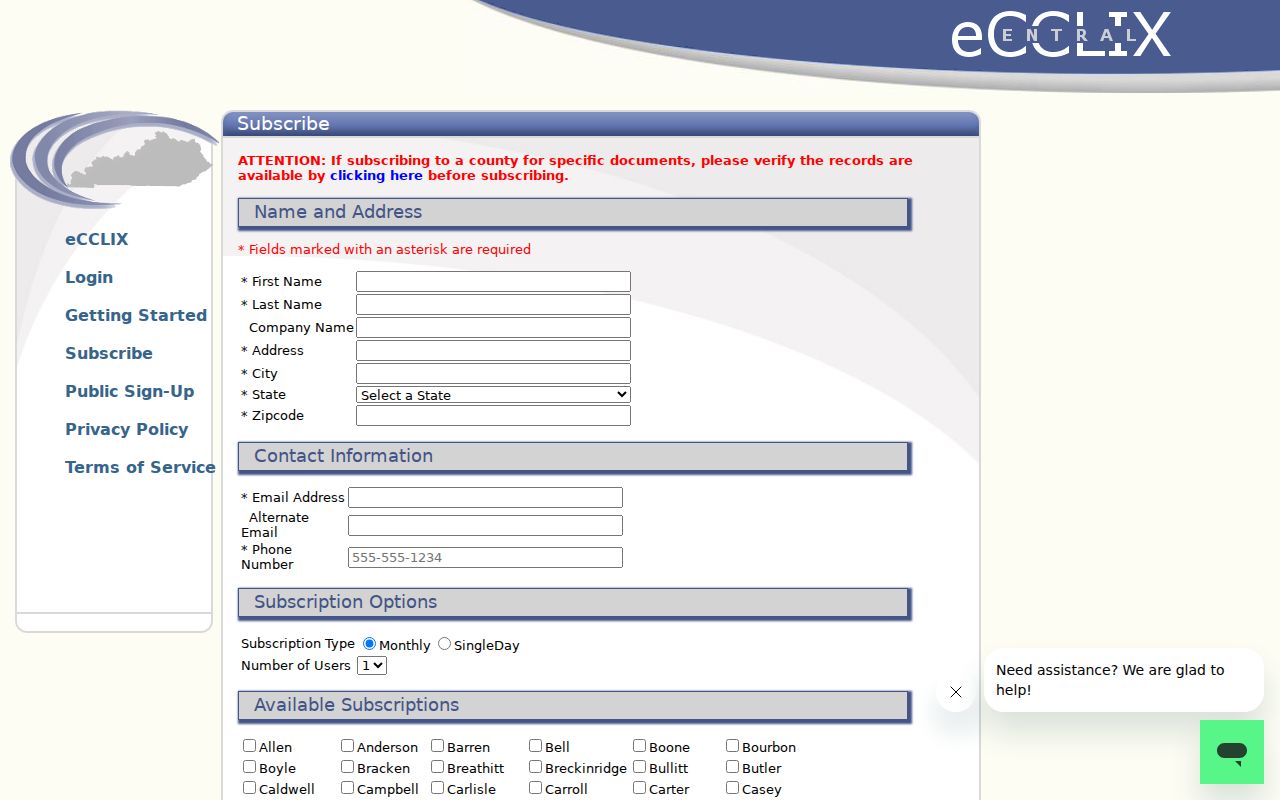
Prices are vendor-controlled and should be checked again before purchase.
Read Shelby's Grantor-Grantee Chain
The historic method works from names, not modern addresses. Start with a known current deed and move backward one grantor at a time, saving each reference before you open the next book.
- Find the current owner's acquisition deed, where that owner normally appears as grantee.
- Save the grantor, dates, legal description, and prior book/page reference.
- Search that grantor as an earlier grantee and compare the land description.
- Repeat through reverse indexes, deed books, or microfilm when automation ends.
- Grantor
- The party transferring the stated interest.
- Grantee
- The party receiving it.
- Chain of title
- The ordered sequence affecting the same land.
- Book and page
- The recorded volume location.
Deeds after about 1890 often cite their prior recordings. KDLA notes that some index entries mark H for heirs, C for commissioner, and S for sheriff. Each mark is a clue, not a substitute for reading the deed. Compare every transfer against the same tract's acreage, lot, subdivision, and adjoining-owner language, and record both the execution and recording dates since they can differ. Keep a simple log of every link in the chain so similarly named people stay attached to the right parcel.
Older Shelby Deeds on Microfilm
The Kentucky Room holds Shelby deeds on microfilm covering 1792 through 1878. Tax lists sit alongside them. Wills through 1913, census material, and local newspapers from 1841 through 2006 round out the shelf. Those sources can bridge a road or farm name that changed over time. KDLA's deed guide explains the backward search, and its archives offer another route. FamilySearch digitized Kentucky wills and deeds, though access conditions vary. No courthouse fire or resulting Shelby records gap appears in the official accounts.
Plats Clarify Shelby Land
A recorded plat places lots, blocks, roads, easements, and subdivision geometry alongside the deed trail. A deed may name only a lot and subdivision. The referenced plat may then be required reading. Rural land needs extra care. Preserve the acreage, metes-and-bounds calls, creeks, roads, railroads, adjoining owners, reservations, and easements.
The PVA's short description is only a lead. The full recorded deed and plat carry the detailed text. A disputed boundary may call for a survey or court order. Match Shelby County deed records by the land itself, not just by party name.
Liens Need Release Searches
The archive holds mortgages, assignments, mechanic's liens, judgment liens, tax liens, lis pendens, and releases. Finding the first filing is only half the task. Search the same names and references again. Look there for a later release, satisfaction, assignment, or court action.
Some fixture interests point to the Kentucky Secretary of State UCC index. For foreclosure, quiet title, or a commissioner sale, public eCourts supplies a lead. The Shelby Circuit Clerk holds the complete case file.
Shelby Court Files Explain Transfers
A deed index records an instrument. The reason behind a commissioner, sheriff, executor, or fiduciary deed often lives in a court file. The Kentucky eCourts guest search offers statewide case information. It can be narrowed to Shelby County by party, business, case number, or event period. That public result is not the complete case.
For a foreclosure, partition, quiet-title action, probate sale, or lien dispute, request the file from the Shelby Circuit Clerk. The Shelby Judicial Center sits at 401 Main Street, Suite 101. The Circuit Court number is 502-633-1287. Older material may have moved to the state records center, where a case or file locator is needed. A court order can explain the authority to convey. The later deed shows what was actually recorded.
Check Every Prior Reference
A name by itself can tie the wrong tract to your search. Families, farms, and businesses often held several parcels at once. So match more than the grantor and grantor. Compare acreage, subdivision, lot and block, road or creek calls, adjoining owners, and any reservation or easement the instrument carries. A book and page citation from an older filing is often the cleanest bridge. It links two generations of Shelby County deed records.
Dates deserve the same care. A deed can sit signed for weeks before the clerk records it. Several instruments filed the same day may shift priority or reveal a package transfer, so line them up side by side. Keep every assignment and release with the mortgage it touches. Where handwriting, abbreviations, or faded images obscure the text, ask the clerk for the best copy. Read the original index instead of guessing.
Note: A recording fee proves nothing about the consideration or sale price stated elsewhere in a transaction.
Shelby Recording Fees
The clerk's recording-fee page lists charges for filing deeds and related instruments.
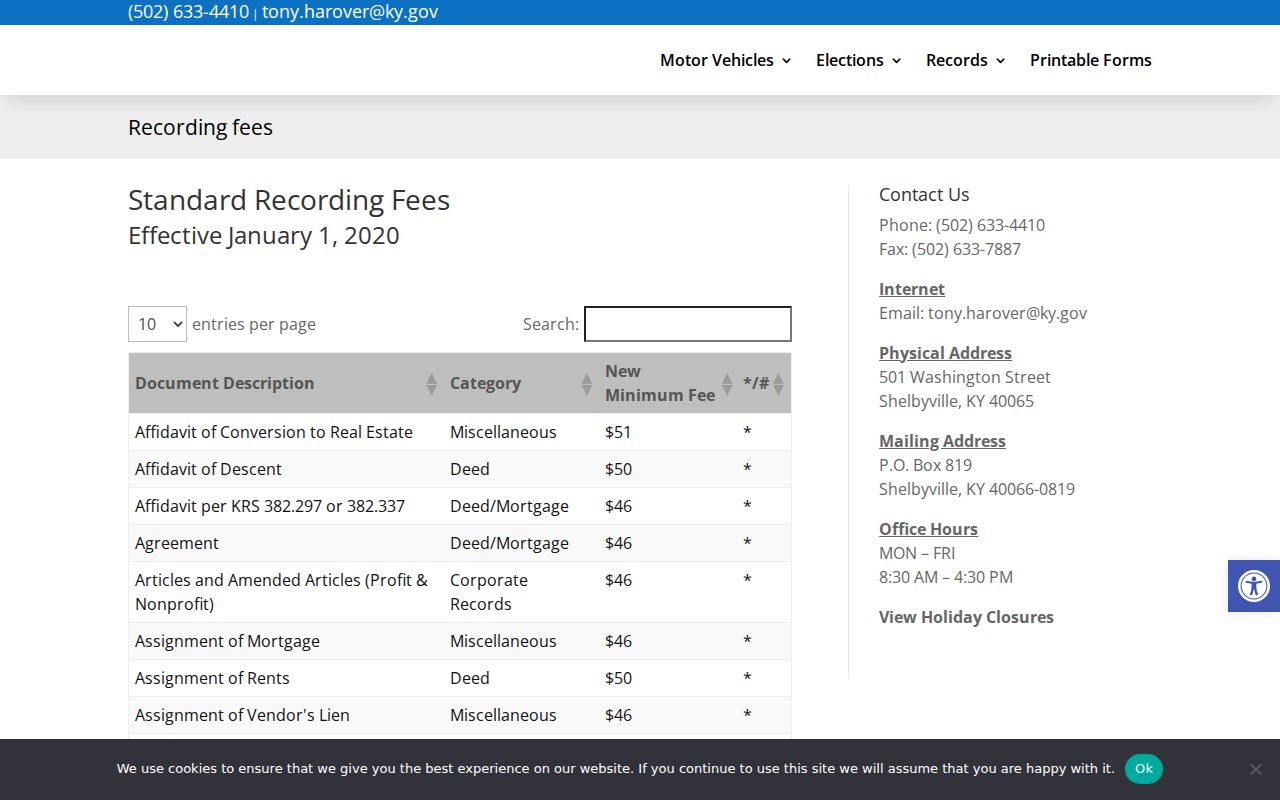
The table covers recording an instrument; copy charges fall under the clerk's separate open-records policy.
Request a Shelby Deed Copy
Subscribers can pull available images through eCCLIX. To work in person, visit the Shelby County Clerk at 501 Washington Street, Shelbyville. Office hours are Monday through Friday, 8:30 a.m. to 4:30 p.m. Ask about terminal rules before you start. Decide upfront whether a plain or certified copy will serve your needs.
The open-records policy allows requests by hand, mail, fax, or email. It promises a written decision within five working days. Noncommercial paper copies generally run 50 cents per page. Recordings, discs, or tapes cost $5 per copy. The separate recording-fee table lists filing charges, such as $50 for a deed, plat, easement, or restrictions. Filing fees and copy prices are two different things.
Recorded, not guaranteed. Shelby County deed records show what reached the clerk. They do not resolve every unrecorded interest or provide a title opinion.